

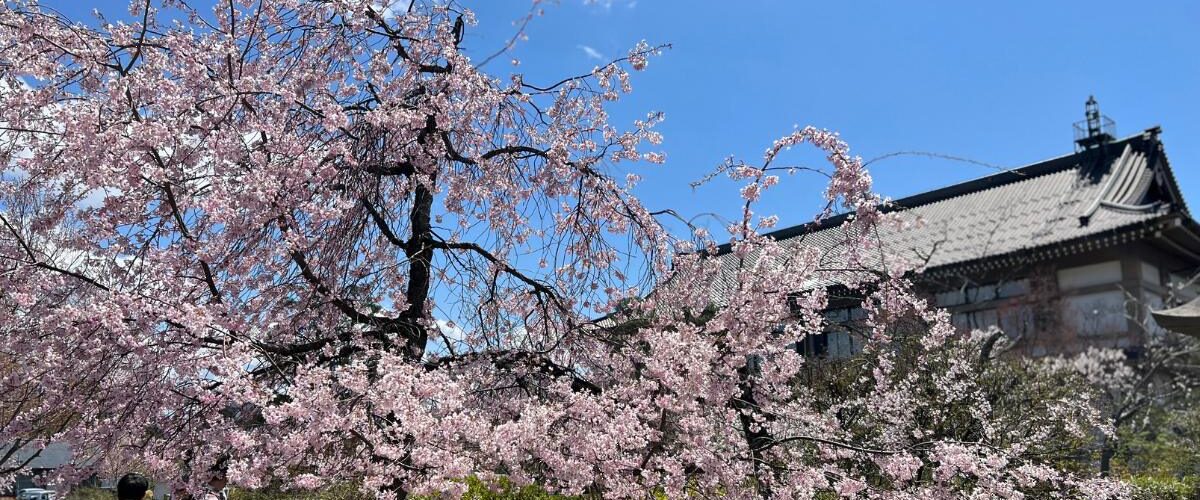
In Japan, hanami, the tradition of viewing cherry blossoms, is about more than just admiring flowers. It’s about appreciating the fleeting beauty of life. Known as sakura, these delicate pink blooms symbolise renewal, beauty, and the fleeting nature of life. Their short-lived appearance, usually between late March and early April in Tokyo, is celebrated with flower viewing parties, picnics and festivals across the country. Sakura blooms for only a few days, then falls like silk confetti in the wind. There’s poetry in their brevity; as the Japanese poet and feminist, Yosano Akiko, wrote, “The life of a flower is short and full of suffering.”
It’s a magical, time-sensitive experience for locals and tourists alike that draws millions of visitors to Tokyo each year, hoping to catch the blossoms at their peak. But, with that popularity comes pressure on hotspots like Senso-ji Temple and the Sumida River, where overcrowding has become a growing concern. It’s beautiful, yes, but it’s also packed. Parks overflow, queues snake through shrine gates and crowds jostle for the same Instagram shot.
I wanted something quieter for my trip to Japan. Something meaningful and more considerate for the local environment. And, according to Booking.com’s Travel & Sustainability Report 2025, I’m not alone. Nearly 90% of Kiwi travellers now want to make more sustainable choices when they travel. Compare that with just 30% in 2016, and it’s clear that more mindful travel has gone mainstream. A third of us are now actively avoiding crowded spots, seeking out lesser-known destinations and better timing to minimise our impact and to have a more authentic experience.
With that in mind, my husband and I braced the 7 am commuter traffic from our hotel in Shibuya to Tokyo Station, where we boarded the Hokuriku Shinkansen north to Nagano, a place better known for snow than sakura.
What I found there was something unexpectedly special.

Cherry Blossoms from Concrete to Countryside
One of the joys of travelling in Japan, I’ve discovered, is how quickly the scenery changes. It seemed that the bullet train was only gliding out of Tokyo Station for moments before the city started to dissolve. Tower blocks give way to suburbs, then rice paddies and sleepy towns, and finally, the foothills of the Japanese Alps. It’s a calming shift, like watching the modern world slowly give way to something older, quieter.
90 short minutes later, we arrived in Nagano and were greeted with fresh mountain air, clear blue skies and far fewer people. Even in spring, the peaks in the distance still held onto snow, a reminder of the region’s reputation as Japan’s winter playground and host of the 1998 Winter Olympics. There’s a giant plaque dedicated to the historic sporting event in Nagano train station.
A Temple with a Timeless Energy
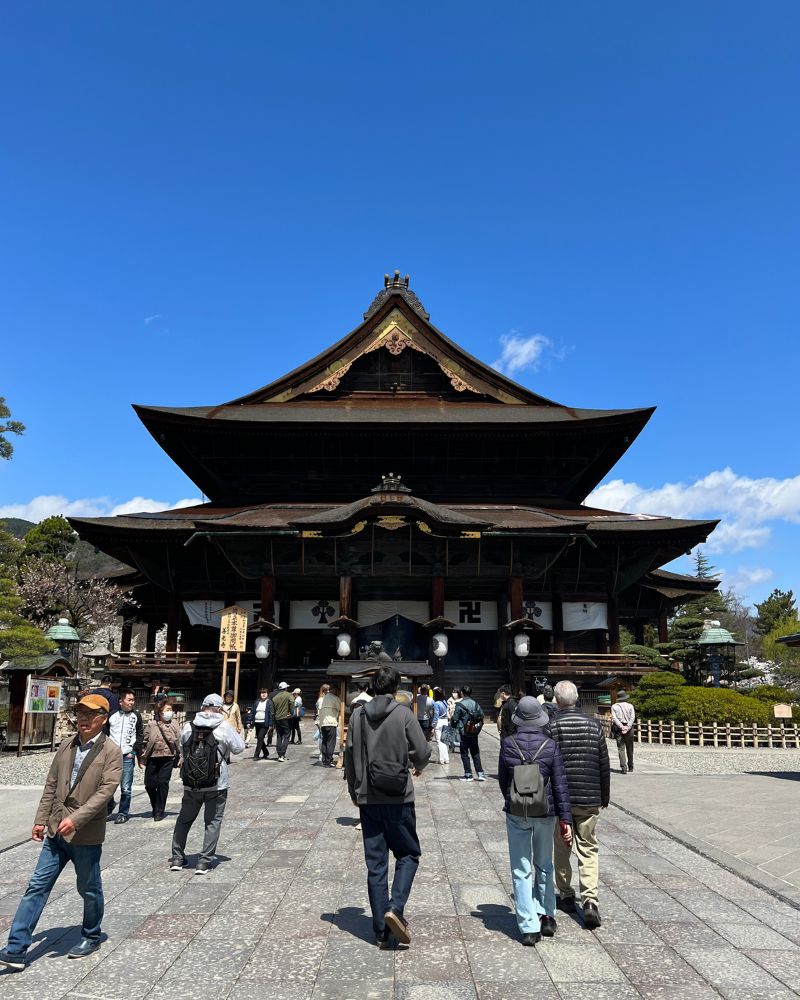
The main reason we decided to see the cherry blossoms in Nagano is Zenkōji Temple. This is one of Japan’s oldest and most important pilgrimage sites, dating back to the 7th century. It holds what’s said to be the first Buddhist statue ever brought to Japan, the statue of Ikko Sanzon Amida Nyorai (Amida Triad Sharing One Halo), the Buddha of immeasurable light and life. The statue of Ikko Sanzon Amida Nyorai, also known as Zenkoji Nyorai was first brought to Japan from the Korean Peninsula in 552 and is so sacred, it’s hidden away from view. Pilgrims have travelled here for centuries to connect with something greater than themselves.
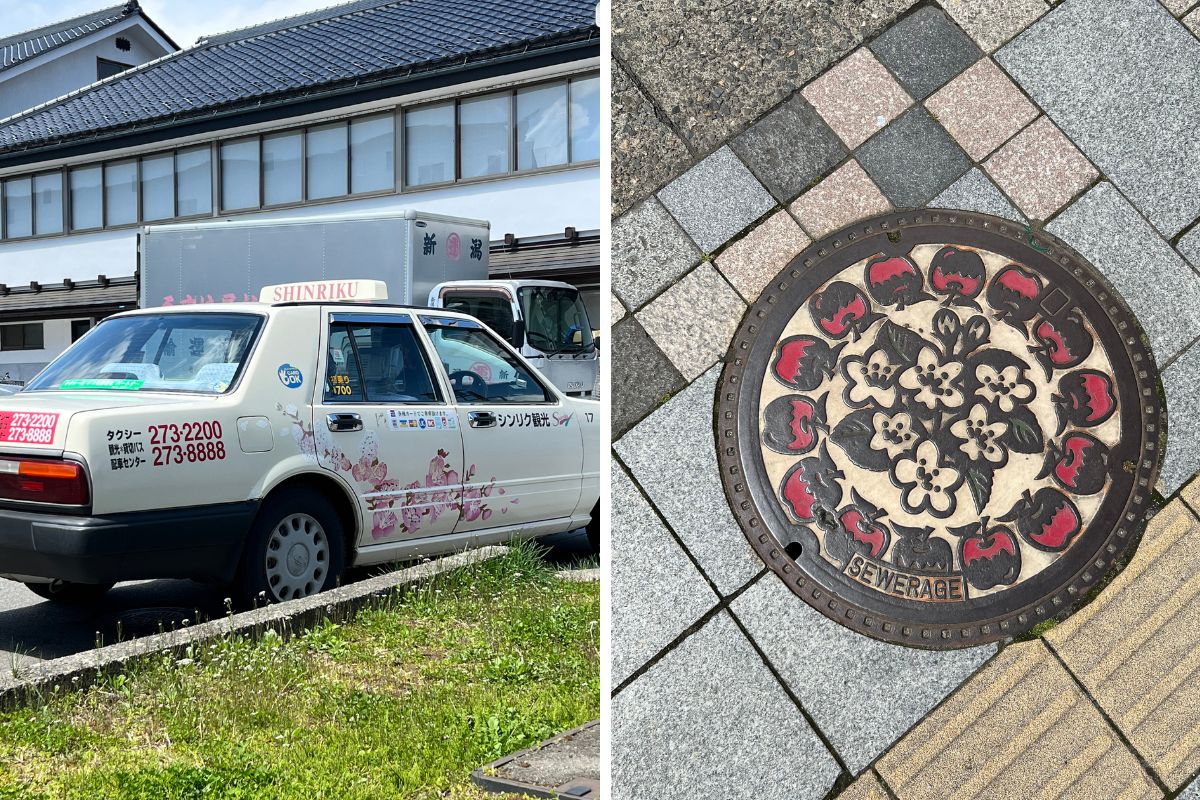
The temple is 1.8 kilometers from Nagano station and can be reached in 30 minutes by foot or 15 minutes by bus. We took a taxi (don’t judge! We were jet-lagged as we’d only arrived in Japan the day before and it was 6 am our time.) Plus, the car itself was decorated with sakura, so I took it as a deep and meaningful sign.
Layers of History
Zenkōji isn’t just beautiful, it’s deeply historical. During the warring states era in the 1500s, this part of Japan was a stronghold for rival samurai clans, and the temple served as a place of refuge and spiritual reflection during times of conflict. You can feel that depth as you wander through its shadowed halls and peaceful courtyards.
There’s even an underground passage beneath the main hall where visitors walk in total darkness, searching for a symbolic “key to paradise” hidden in the wall. It’s said that finding it brings a sense of spiritual connection, and whether or not you believe it, the experience is quietly moving.
The Sakura Experience
Sakura is a big deal in Nagano. Thanks to the region’s cooler climate, the trees here bloom a touch later than Tokyo’s, making it the perfect second stop for cherry blossom chasers like me who missed the capital’s peak. We were there on April 11, so it was perfect for us. The sakura is a deeply symbolic part of Japanese culture and we spotted the flower emblem everywhere in Nagano, including decorative street drain covers and even our taxi was decorated with the blooms.
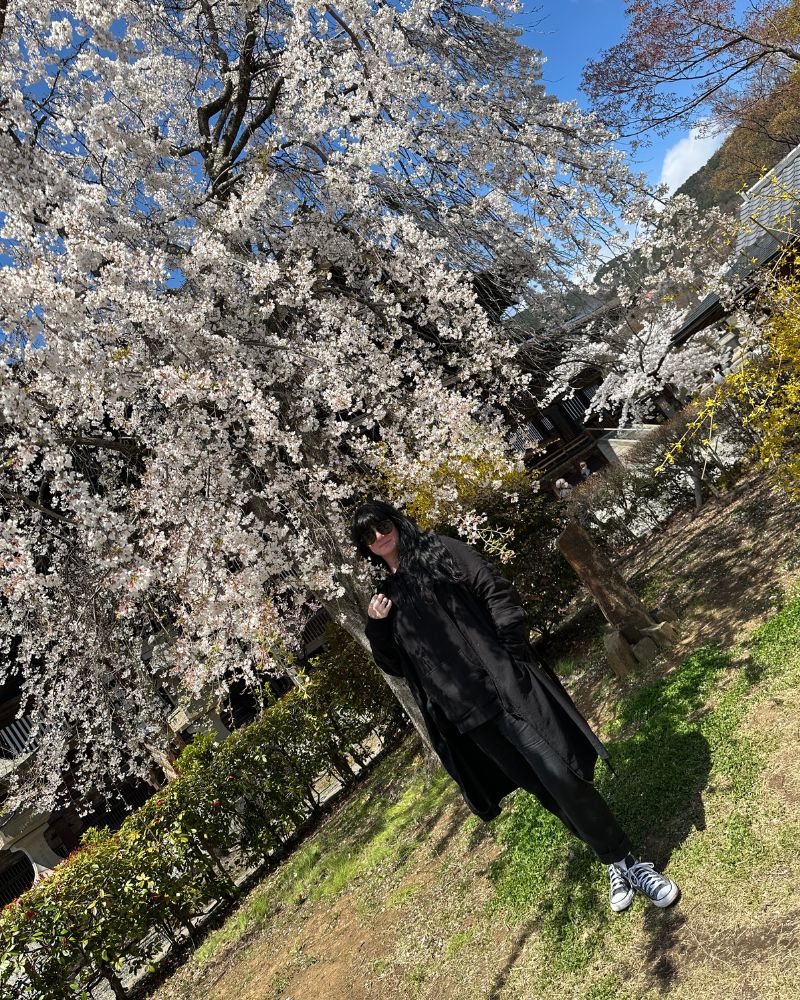
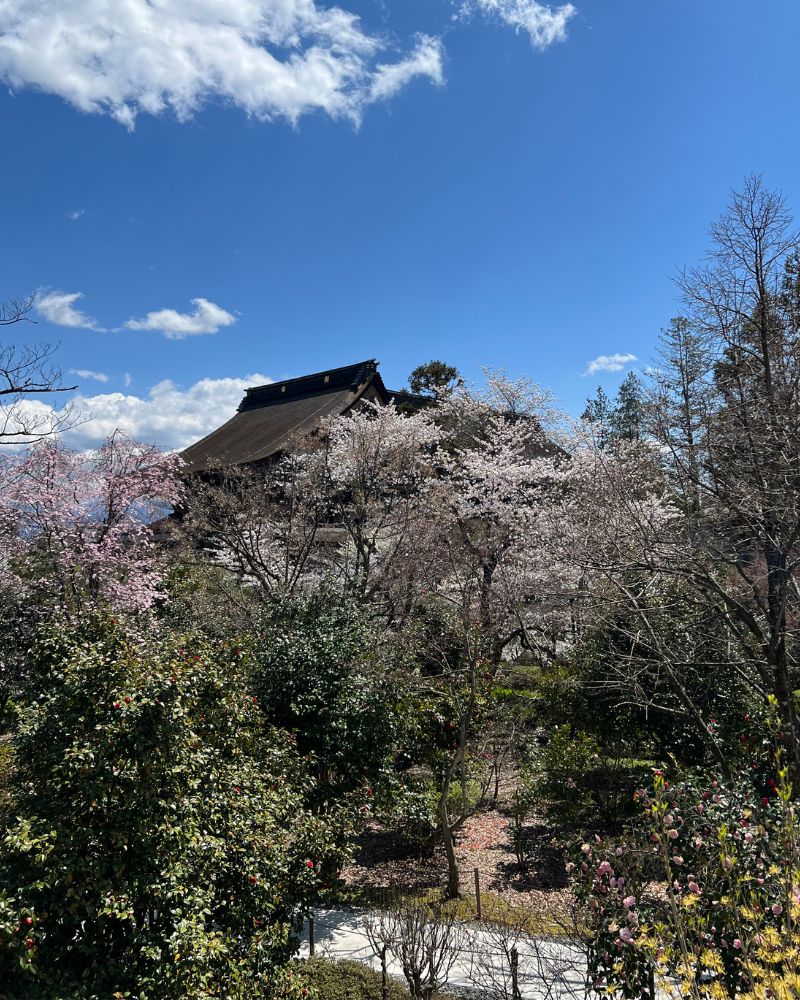
On the day of our visit, the temple’s vast grounds were in bloom with sakura. I found the juxtaposition of ancient stone lanterns against soft, fluttering petals is utterly transportive. The quiet, incense-scented paths of Zenkōji gave me a serene sense of impermanence. I had a moment that felt like all my senses were awakened: the soft crunch of footsteps on gravel, a distant bell ringing like a slow exhale, the earthy sweetness of incense curling through the cool mountain air. Sakura petals drift like snowflakes, catching the light as they fall. It gave me a chance to pause, breathe and simply be present in this unique and powerful place.
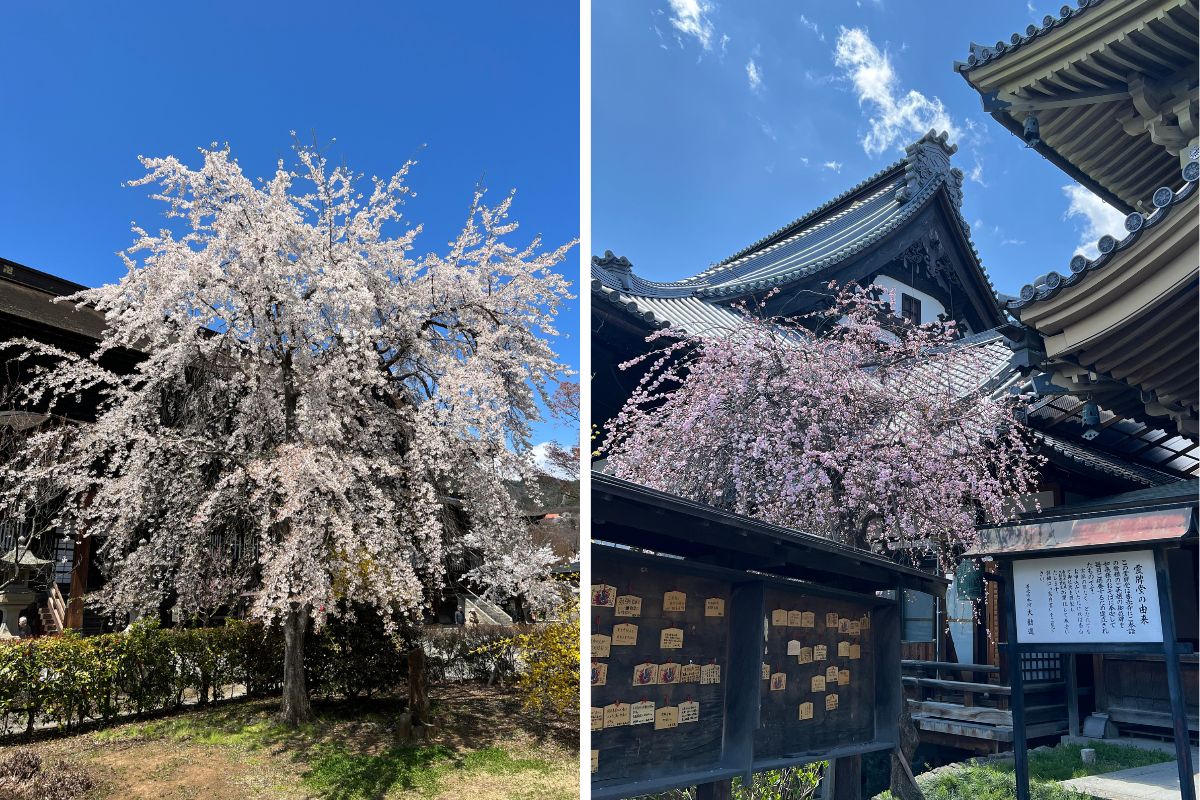
The blossoms here feel different, too. We explored the grounds slowly, taking in the centuries-old temple architecture framed by the soft ethereal blush of Somei Yoshino trees and Shidarezakura, the elegant weeping varieties that drape dramatically over stone lanterns and temple walls. It was truly breathtaking.
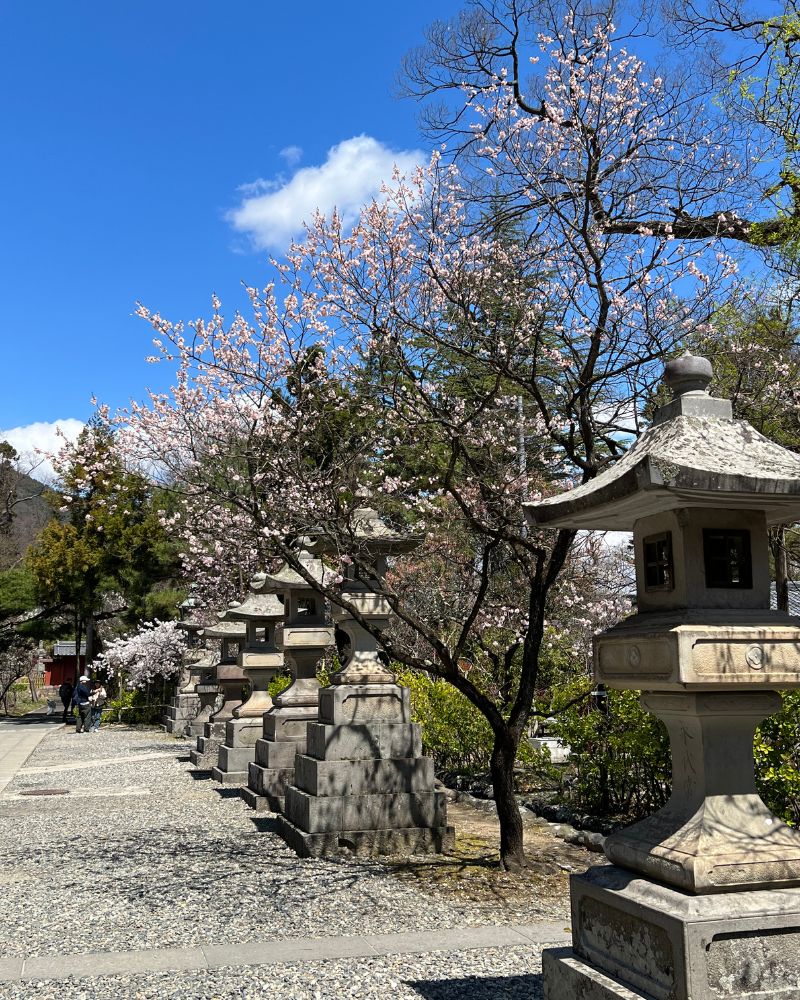
A Slower Way to Travel
Nagano offers more than a single stop. It’s a region worth lingering in, if you can. Sadly, we only had time for a day trip to but I can guarantee you’ll want to make time to stay a night or two in a traditional ryokan. While you’re there, try the region’s famous handmade soba noodles (I can confirm they are delicious) and unwind in an outdoor onsen, surrounded by Japan’s spectacular natural beauty. Better yet, book an excursion through Booking.com and let the local guides take you on a sake tour, ninja training or visiting the local snow monkeys higher in the mountains. And much, much more!
Making better, more sustainable travel choices supports the local community. Smaller destinations like Nagano benefit from thoughtful tourism, especially outside of the busy ski season. So I felt like I was making a positive impact, while discovering a different side of Japan. Win-win.
Looking to slow down and travel with intention? Booking.com makes it easy to plan trips that are not only beautiful, but better for the places you visit.
This article was produced in partnership with Booking.com. All photos are the author’s own.